Journalist Nabil Al-Sufi has highlighted that successive defeats faced by forces opposing the Houthi militia, from the Dammaj events in 2013 to recent military developments in 2026, have been a unifying national factor among various factions under the legitimate government. He attributes the Houthi gains to political and military divisions and the failure to consolidate fronts, which have created conditions for their territorial advancements.
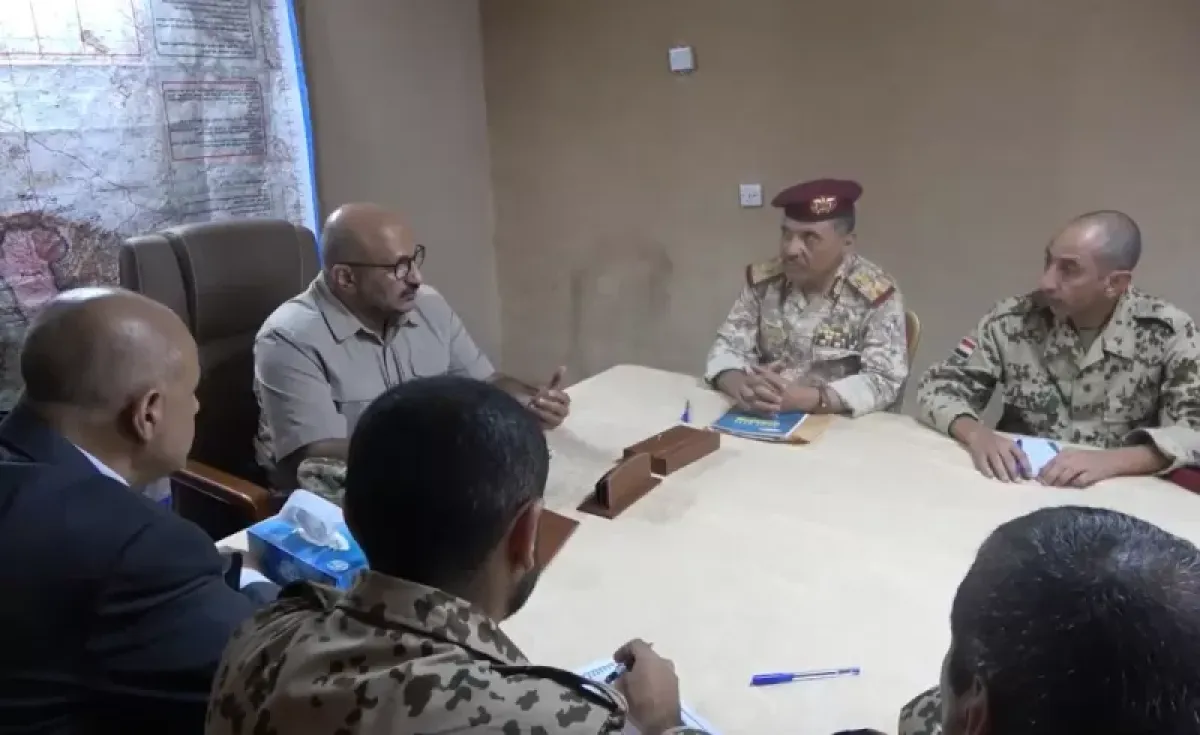
In an extensive article titled "Our Bitter Defeat: The Greatest Common National Denominator," Al-Sufi recounted witnessing the efforts of Major General Tareq Saleh, a member of the Presidential Leadership Council and commander of the National Resistance, to unify national ranks around the city of Mokha. Saleh aimed to establish Mokha as a base for liberating the state by fostering communication with diverse political and military entities, including the Islah Party and the General People's Congress, and expanding partnerships to encompass Taiz, Tihama, and other republican fronts.
Al-Sufi noted that these initiatives included repeated invitations to Presidential Leadership Council Chairman Rashad Al-Alimi, prime ministers, ministers, provincial governors, and military and political leaders to visit Mokha and use it as a coordination center. However, these attempts were met with reservations from the parties involved, preventing the formation of a broad national front that could overcome their political concerns and calculations.
The article revealed a meeting in Riyadh, chaired by the President of the Presidential Leadership Council and attended by Major General Tareq Saleh, Speaker of Parliament Sultan Al-Barakani, and leaders from the Islah Party and the National Resistance. The meeting discussed unifying efforts to complete the liberation of Taiz Governorate. Al-Sufi stated that he proposed during the meeting to task Tareq Saleh with organizing the theater of operations and launching a military campaign to liberate the governorate, starting from unified fronts extending from the coast to the mountains. The meeting concluded without practical steps, despite the readiness of various components for coordination, as political differences and calculations overshadowed the discussions while the Houthi militia moved to exploit the disunity among opposing forces.
Al-Sufi also addressed military disagreements, citing the Al-Kadha front and the disputes between the National Resistance and the Taiz axis. He argued that assigning blame to a single party for the front's fall misrepresented the broader failure, which encompassed all legitimate government components, including military forces and regional supporters, due to the inability to build a shared project that necessitated coordination and mutual concessions. He emphasized that these differences evolved from mere political disagreements into battlefield vulnerabilities exploited by the Houthis.
Major General Tareq Saleh, Al-Sufi asserted, had repeatedly warned of the dangers of continued divisions, believing that fronts could not tolerate political calculations and that a lack of military coordination would render everyone incapable of countering any Houthi breakthroughs. In his analysis of recent military developments, Al-Sufi contended that the Houthis capitalized on the confusion and divergence among opposing forces, coupled with a lack of military initiative and offensive planning. He stressed that military preparations lose their value if confined to defense without an offensive capability, and that the Houthis skillfully read this situation and exploited weaknesses in Taiz, Hodeidah, the South, and the legitimacy itself.
The journalist pointed out that the militia had managed to control 20 districts within two months, including six on the West Coast, benefiting from the absence of unified military decision-making and reduced coordination between fronts, despite media movements and declarations that were not matched by sufficient field preparations. Al-Sufi concluded by emphasizing that the current phase allows no further debates or accusations among anti-Houthi forces. He called for overcoming past failures and rebuilding fronts on common national and military foundations, warning that continued division would lead to repeated defeats. He cautioned that the Houthis might not triumph over Yemenis as much as the existing forces might lose their opportunity to restore the state. Al-Sufi warned ominously, "The alternative to reviewing mistakes and reorganizing ranks is for the country to replace the current powers with others capable of shouldering the responsibility of confrontation," implying that national slogans and claims are insufficient without unified field action.