The author asserts that a pervasive national defeat has been the most significant commonality across various Yemeni factions and political movements since 2013, overshadowing any purported unity or shared objectives.
The article criticizes the lack of a cohesive national strategy, highlighting numerous attempts by figures like Tarek Saleh to unify disparate groups under the banner of legitimacy. Saleh is portrayed as consistently advocating for a broad coalition, including former adversaries, emphasizing that victory is impossible without encompassing all segments of society. The author recounts Saleh's efforts to engage various political and military entities, including the General People's Congress and the Islah Party, as well as his invitations to national leaders and officials to visit Al-Mukha, which were largely met with deferrals or rejections.
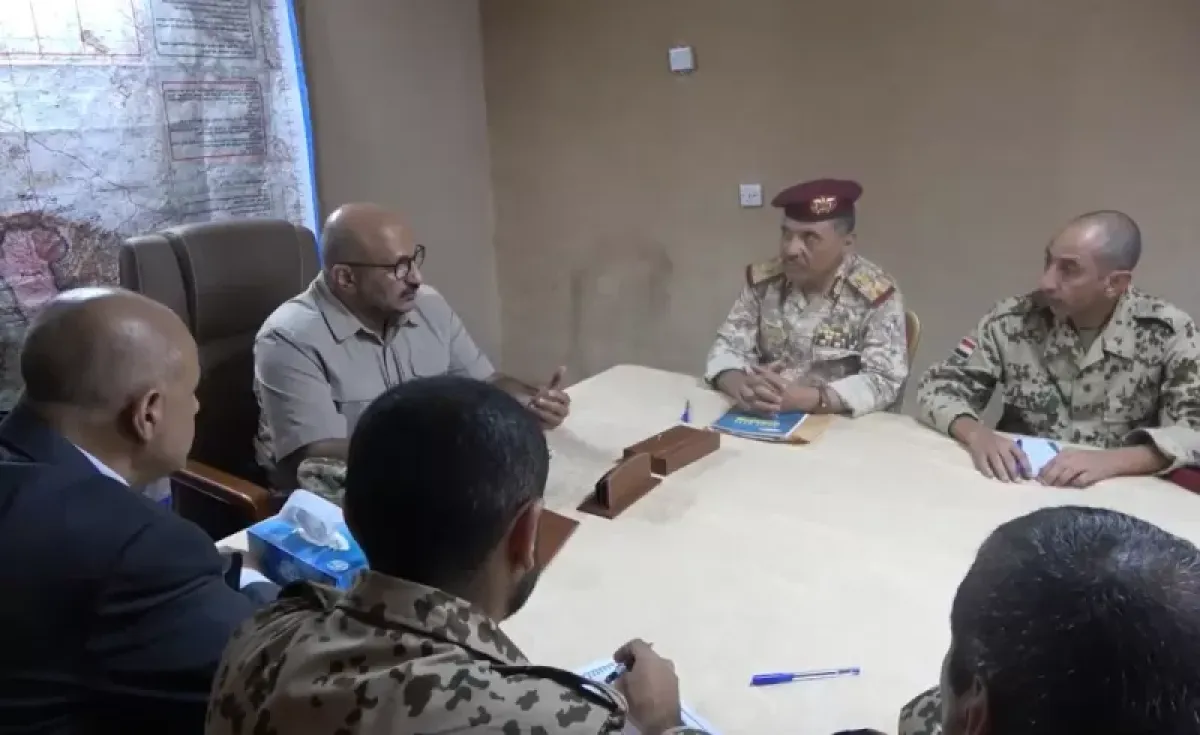
The narrative shifts to the context of Taiz, describing a crucial meeting in Riyadh prior to the "year of Al-Khush'ah." This meeting, attended by President Rashad Al-Alimi, Tarek Saleh, Sultan Al-Barakani, and leaders from the Islah Party and the National Resistance, aimed to discuss Taiz's strategic importance and potential liberation efforts. Despite initial readiness and discussions among various components, the meeting ultimately concluded without concrete action, devolving into formalistic exchanges. The author recounts their own plea for Tarek Saleh to be tasked with organizing an offensive to liberate the governorate, emphasizing that Taiz's unity would bolster national strength.
The author further elaborates on the strategic significance of Al-Kadha, a point of contention between the National Resistance and the Taiz axis. Control over this area was seen by the Taiz axis as vital for liberating Al-Mukha, while the National Resistance viewed the axis's actions as a natural reassertion of state control. The author posits that the underlying issue was not betrayal by any specific faction, but rather a failure of the legitimacy framework and its leadership to forge a genuinely unified project that would instill trust and encourage concessions among all parties, thereby enabling a collective effort against the Houthi insurgency.
The article concludes with a stark assessment of the current situation, framing Al-Mukha's strategic potential as a missed opportunity. Following the UAE's withdrawal, Al-Mukha became a Saudi focus, intended to serve as a launchpad for liberating Hodeidah. However, the city remained mired in stagnant campaigns, mirroring the stasis of 2017. The author notes the Houthis' perception of this disunity and the disparity between the legitimacy's media pronouncements and actual battlefield capabilities. They argue that the Houthi's successful offensive, resulting in the capture of 20 districts within two months, was a direct consequence of exploiting the "shared failure" across various fronts and political entities. The piece ends with a call for a complete reevaluation and rebuilding of national fronts, warning that continued infighting will lead to further defeats and the replacement of current leadership by those who might be more effective, though not necessarily more aligned with national interests.