A federal judge expressed skepticism Tuesday regarding a Trump administration request to immediately halt the counting of approximately 20,000 California ballots from voters whose citizenship is under question, indicating a ruling would be forthcoming Wednesday.
U.S. District Judge David O. Carter questioned the methodology used by the administration to compile its list of potentially noncitizen voters. He voiced concerns about the potential disenfranchisement of eligible voters, stating that the demand would represent a "monumental change" to California's electoral processes. Judge Carter also suggested that federal prosecutors had alternative avenues for holding individuals accountable for illegal voting.
Despite these reservations, and only a day after a federal appeals court rejected a similar request, Judge Carter announced at the conclusion of a 3½-hour hearing in Los Angeles that he required additional time to issue a ruling. He did, however, make one immediate pronouncement: "This court believes it would be wise — that it would be wise — that any threats to state and county elected employees cease immediately." This statement was a direct response to federal authorities who had reportedly threatened election officials with criminal penalties if they counted the flagged ballots.
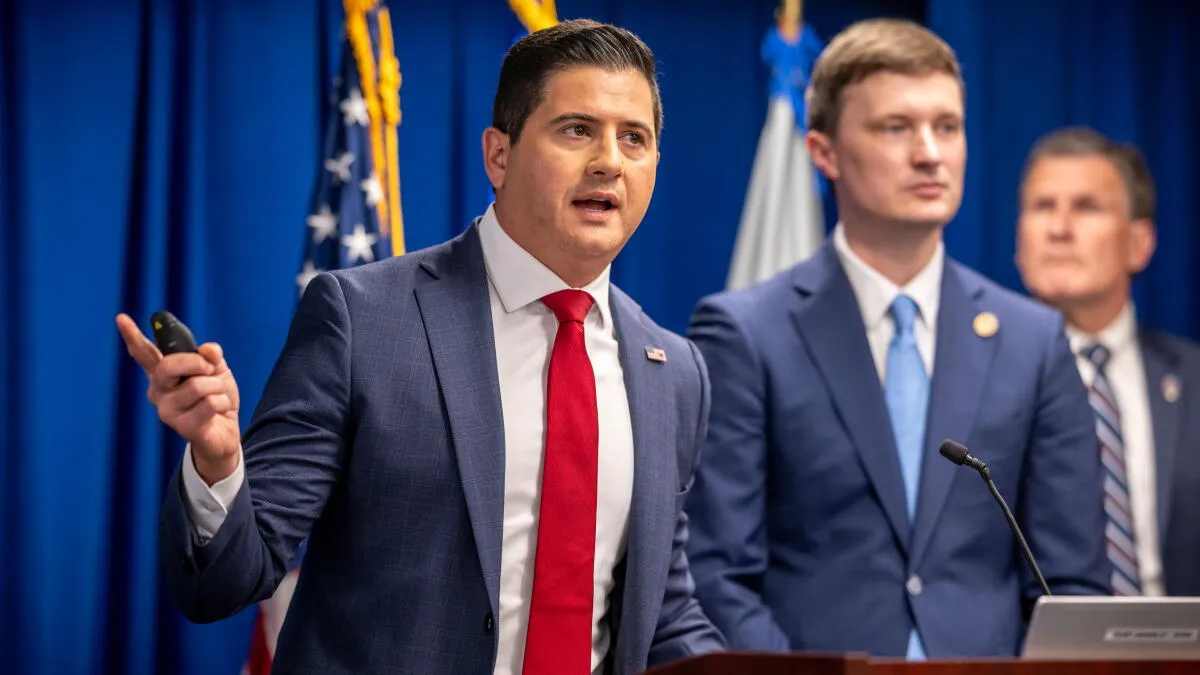
Following the hearing, First Assistant U.S. Attorney Bill Essayli, representing the Trump administration, asserted that "American voters are being disenfranchised in real time." He indicated that the administration would await Judge Carter's decision before potentially appealing the matter. Essayli also refuted claims of threatening state officials, despite Justice Department letters warning of criminal punishments for election officials who did not segregate the ballots in question.
The hearing occurred after the U.S. 9th Circuit Court of Appeals declined jurisdiction over the same request, a procedural rarity initiated by the Justice Department attorneys who sought to bypass Judge Carter's initial review. The appellate panel, comprising two Trump appointees and one Biden appointee, ruled that it lacked jurisdiction because Judge Carter had not yet made a ruling. The case then returned to Judge Carter's court.
Judge Carter, an appointee of President Clinton, appeared reluctant to expedite his decision. He emphasized the need for greater clarity on the administration's methods for identifying potential noncitizen voters and expressed a desire to develop the evidentiary record further, potentially by engaging an expert. He questioned the underlying systems and algorithms used, stating, "What are these systems? What are the algorithms? How was this derived?"
The Justice Department's lawsuit against California, Secretary of State Shirley Weber, and Los Angeles County Registrar-Recorder/County Clerk Dean Logan was filed on October 15th, following a demand from Acting Deputy Attorney General Trent McCotter for election officials to set aside the ballots of 20,000 voters identified as "likely noncitizens." Attorneys for Weber and the state argued that the administration's demands were legally unsound and lacked supporting evidence, particularly during an active election. They contended that the administration's reliance on data and methods known to be unreliable was problematic.