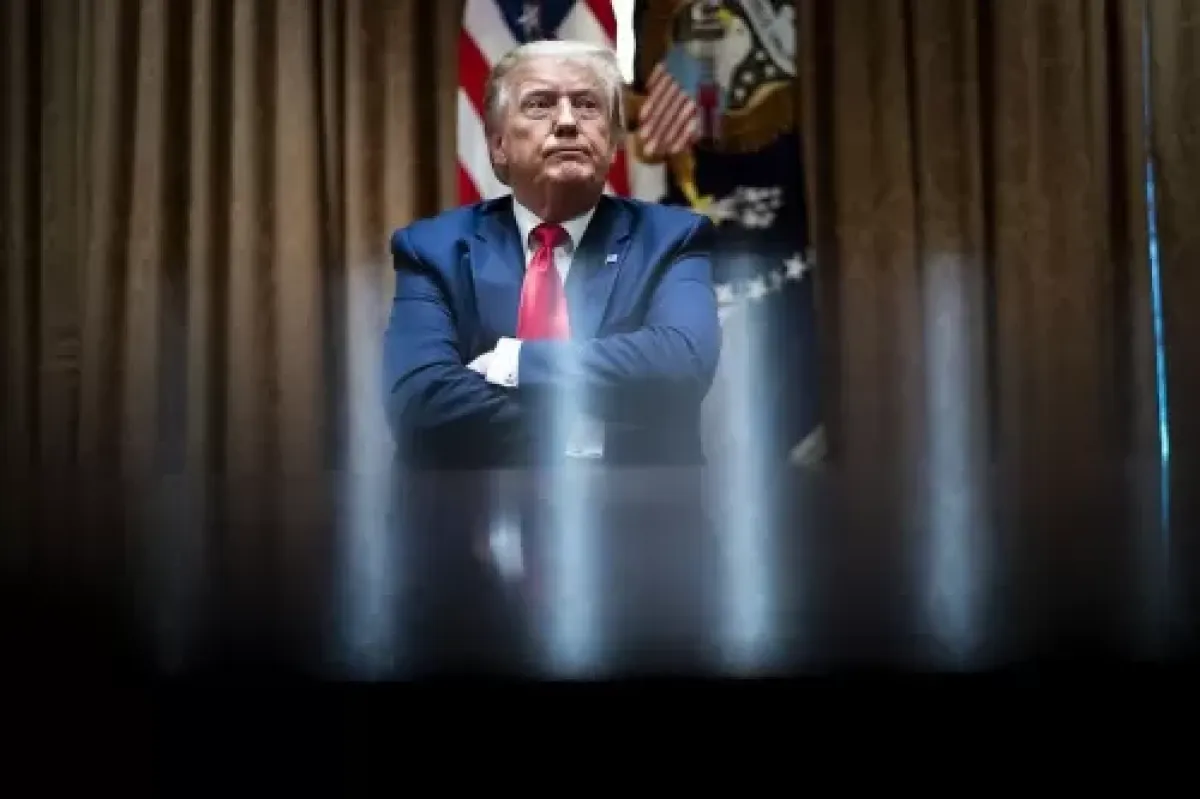
U.S. President Donald Trump stated on Saturday that the war with Iran would conclude "very soon" and asserted American control over the Strait of Hormuz, amidst escalating tensions impacting maritime security and energy markets, concurrent with Houthi actions in the Red Sea and Bab al-Mandab.
Speaking in Dublin, Ireland, Trump indicated that Iran seeks an agreement and that the United States is "winning significantly," emphasizing that Tehran will not acquire nuclear weapons. He projected the conflict's resolution in the near future, potentially linked to the U.S. midterm elections. The President also predicted a sharp decline in oil prices post-conflict, aiming to reassure markets amid disruptions to shipping and rising energy costs due to regional tensions.
In a notable development, Trump revealed that the Iran-backed Houthi militia has contacted the United States, stating that the group "does not want to fight us" and wishes to avoid U.S. attacks. These remarks follow an increased Houthi presence near Bab al-Mandab, adding a new dimension to the regional crisis, with Iran and its allies now exerting pressure simultaneously on the Strait of Hormuz and Bab al-Mandab, critical global trade and energy chokepoints.
U.S. reports previously indicated Saudi Crown Prince Mohammed bin Salman's request for Trump's military intervention against the Houthis. However, the U.S. administration has not yet shown readiness for direct involvement, though it has suggested its stance could shift if risks to Red Sea navigation escalate. Trump's statements arrive at a critical juncture for global energy security, with shipping in the Strait of Hormuz severely disrupted by the conflict with Iran, and Houthi escalation in the Red Sea heightening risks for an alternative maritime route used by regional nations to bypass Hormuz.
Trump reiterated U.S. control over the Strait of Hormuz, even as reports confirm a significant reduction in vessel traffic. Saudi Arabia's ability to export oil via alternative routes has become more vulnerable following the targeting of the East-West pipeline. Trump suggested Iranian involvement in the pipeline attack, while describing the Saudi Crown Prince as a "very good friend." Saudi Arabia temporarily halted the East-West pipeline after a drone attack, which Iraqi authorities stated originated from Iraqi territory, prompting an investigation and disciplinary actions in Baghdad. The pipeline's disruption is significant as it offers Saudi Arabia a route to bypass the Strait of Hormuz, amplifying pressure on global energy supplies when combined with the Hormuz disruptions and Houthi actions at Bab al-Mandab.
Trump's pronouncements from Dublin convey a dual message of threat and pressure, alongside an indication of an impending settlement. While affirming that Iran will not obtain nuclear weapons and that Washington controls Hormuz, he simultaneously signals an imminent end to the war and a reduction in oil prices, alongside disclosures of Houthi outreach to avoid direct confrontation with the U.S. These developments place the Yemeni file within the broader context of U.S.-Iran confrontation, particularly with the escalation in Hormuz coinciding with tensions at Bab al-Mandab. According to Trump, the Houthis are disinclined to engage in direct conflict with Washington, with their future stance dependent on developments in the war with Iran and their capacity to maintain influence over a vital global maritime passage.