Iran's World Cup campaign commenced amid significant controversy and protests in Los Angeles, with a notable segment of the Iranian diaspora expressing opposition to a team perceived as representing the current extremist government in Tehran.
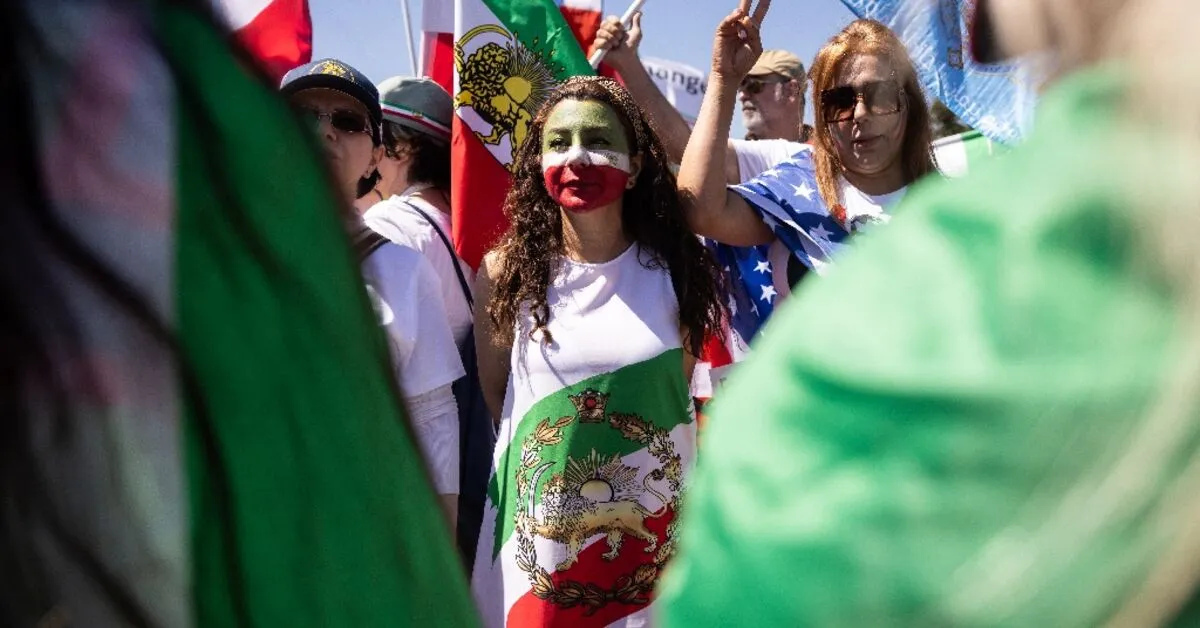
Hundreds of demonstrators gathered outside SoFi Stadium, waving the pre-revolutionary flag that is prohibited by the Islamic Republic's leadership. Protesters voiced their disapproval, with one demonstrator, Ava Amin, stating, "This team is not the Iranian people's team, it's the regime's team," and condemning the team's perceived silence on government abuses.
While the substantial Iranian community in Los Angeles could have created a home-field atmosphere for the team's 2-2 draw against New Zealand, a significant portion of the diaspora actively opposes the Islamic Republic. They aim to leverage the World Cup's global attention to highlight alleged human rights abuses by the clerical regime. Gilbert Gastin, an Iranian-American who has lived in exile for two decades, stated, "It's the mullahs' team, so we can't support them," referencing the regime's alleged violent suppression of popular demonstrations.
The playing of the Iranian national anthem was met with a mixture of cheers and boos, echoing sentiments from the 2022 World Cup held shortly after the crackdown on protests following Mahsa Amini's death. Despite FIFA regulations against political symbols, many fans displayed the pre-revolutionary flag and protest t-shirts within the stadium, with stewards occasionally intervening but failing to remove all such displays.
This division was lamented by some fans, such as business owner Farideh Mansoor, who believes in supporting the team purely as a sporting entity. However, the team's participation has been overshadowed by broader geopolitical tensions, including recent military actions involving Iran, the US, and its allies, as well as an announced outline deal to end hostilities. The team's logistical arrangements, including a change of training camp location and visa issues for staff, underscore the complex political climate surrounding their presence.
Hamid Parvizi, an accountant, acknowledged the difficulties faced by the players but found it impossible to separate sports from politics when it comes to Iran. He cited the presence of commemorative pins worn by team officials and questioned the team selection process, suggesting political factors influenced the exclusion of prominent player Sardar Azmoun due to his social media activity.